Yesterday morning I went to the Faculty of Humanities and Philosophy at the University of Tor Vergata in Rome for an interesting masterclass organized by ARSIAL and the University on "native viticulture and food and wine capital in territorial tourism development" with speakers ARSIAL technicians Di Giovannantonio and Pica and Prof. Di Renzo, professor of "tourism anthropology".
You might say: but what does food and wine and native grape varieties have to do with the world of olives and olive oil?
Well, I asked myself the same question and that's why I went. To listen, understand, comprehend, imagine, report, adapt the communication techniques from other worlds to ours.
Beyond the technical details that were illustrated, I was particularly struck by Prof. Di Renzo's speech who, at a certain point in his talk, defined wine as an "indispensable superfluity".Hearing this, I asked myself this question: how come wine, thus defined as an "indispensable superfluity", is something we can't do without on our tables, while extra virgin olive oil, which is the main ingredient of all Mediterranean cuisine and diet, we can, penalizing our dishes by choosing from the shelves oils that are just sufficient to pass the minimum chemical analyses necessary to determine their commercial classification?
Probably the answer lies in our history and in the millennia of culinary culture we carry on our shoulders, because at the end of the event this thought came to my mind:
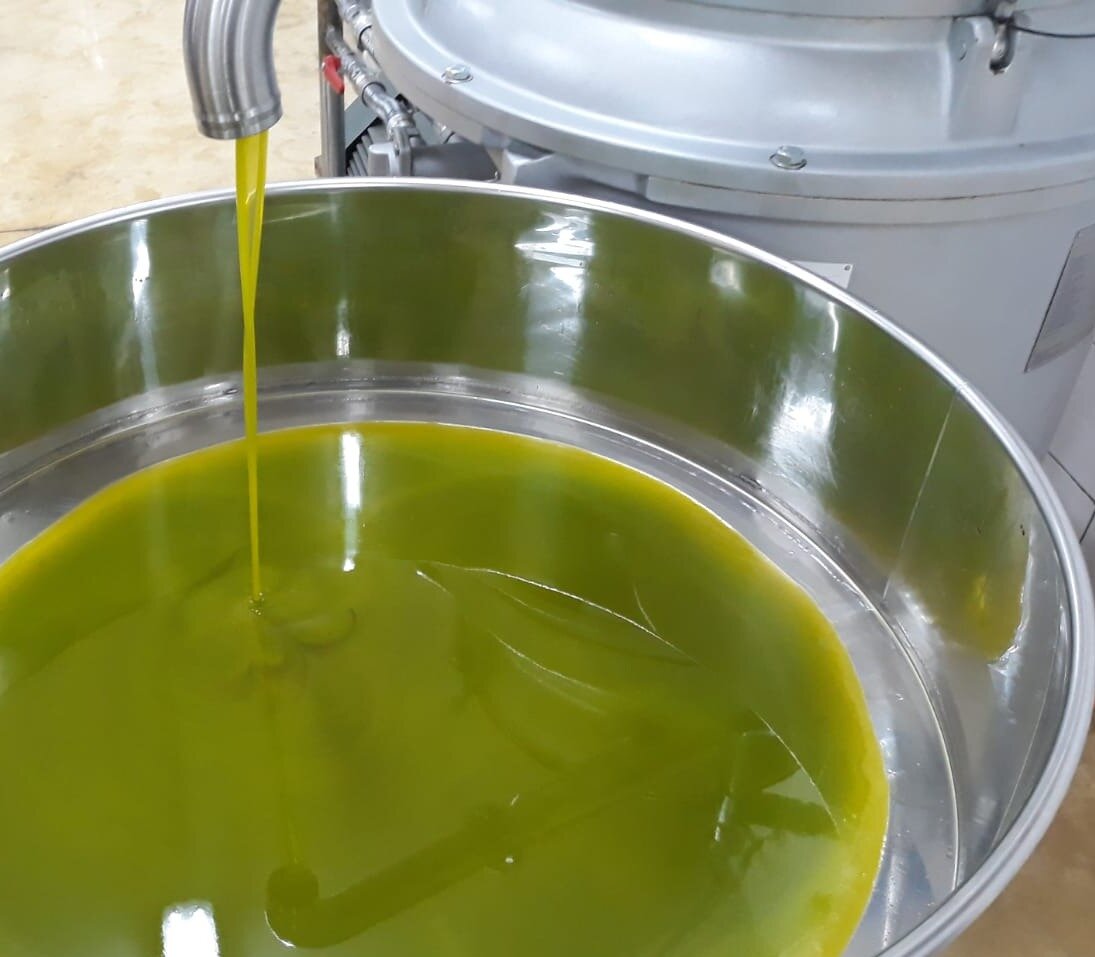
until the second half of the 1900s we produced oils with the same techniques used by the Greeks and Romans more than 2000 years ago. Later, between 1970 and 1980, the world of olive oil technology was revolutionized by the introduction of continuous mills. However, these first mills, to produce the same quantities of oil as with the old techniques, needed to work at fairly high temperatures, thus producing oils very similar to those from discontinuous mills.
This constant production of oils with certain organoleptic qualities, lasting for millennia, has in fact formatted our tastes.
Today, however, with greater knowledge of agronomic operations, the necessary care in harvesting and handling the fruits, and with the use of the best extraction techniques, we produce oils that have such particular organoleptic characteristics that they are out of taste.
In practice, it's as if the 20th-century consumer does not recognize in these new oils the product extra virgin olive oil.
But oil, in Mediterranean cuisine, is not an indispensable superfluity, it is instead the primary ingredient. But which oil are we talking about??? The one produced with the techniques of the last 2000 years or the one produced with the techniques of the last 20 years?
And are 20 years enough to make the consumer understand that this new product, so fragrant and sometimes quite bitter and spicy, is extra virgin olive oil, that is, a fruit juice that can be particularly helpful to our health and give more flavor and harmony to our cuisine?
This is the real communication barrier to break down in the coming years, to make the whole world understand that the extra virgin olive oils produced today, with their positive olfactory characteristics and their bitterness and spiciness, are the true new extra virgin olive oils.
It is precisely these characteristics that allow everyone to easily and simply recognize them, to be indicators of positive health qualities, and to allow us economic savings because such oils should be dosed in use and not abused, as a little is enough to give more flavor to our dishes.
In the 21st century, extra virgin olive oils, the good ones, must continue to be irreplaceable ingredients in all our dishes and in Mediterranean cuisine, that is, representatives of our culture, which certainly has its roots in 2000 or more years of history, but increases and progresses more and more every day.
Antonio Genovesi Farm
via San Francesco, Boville Ernica (FR) Italy
email info@agricolagenovesi.it
mob. +39 347 6941166
VAT no.: 03135300600

The Blog - Evo, Olives, Pruning, Tasting
everything you need to know about the Evo, and even more
Sweet for over 2000 years. Fragrant, bitter and spicy for just 20 years...
Sweet for over 2000 years. Fragrant, bitter and spicy for just 20 years...
2023-07-29 11:26
2023-07-29 11:26
Array() no author 92913
Antonio Genovesi Farm
via San Francesco, Boville Ernica (FR) Italy
email info@agricolagenovesi.it
mob. +39 347 6941166
VAT No.: 03135300600