Antonio Genovesi Farm
via San Francesco, Boville Ernica (FR) Italy
email info@agricolagenovesi.it
mob. +39 347 6941166
VAT no.: 03135300600

The village, the area and the olive groves


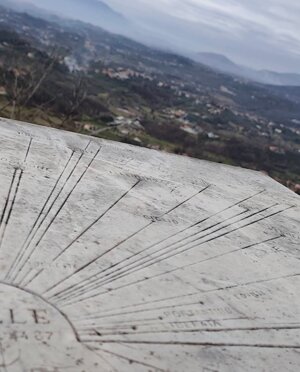
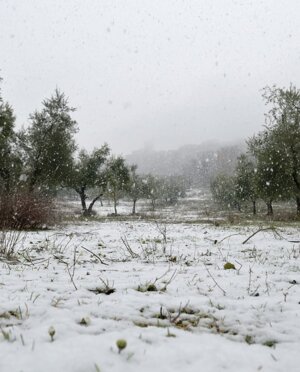
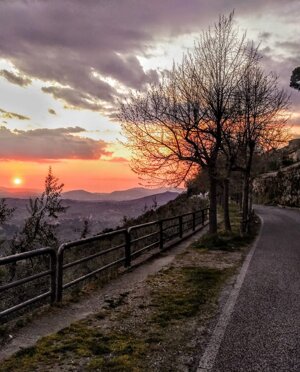
The recently adopted name Boville Ernica (Bauco until 1907) recalls the ancient past of the first Volscian then Roman city of Bovillae and its belonging to the territory inhabited by the Hernici, an ancient people of Lazio. 11th-12th century.
The village was fortified with an imposing ring of walls including eighteen towers with circular and square bases shortly after the year one thousand, but this was not enough to protect it from the sackings by Barbarossa in 1170 and by Henry VI in 1186 and then in 1194 by German troops; a hostile assault was instead repelled by the inhabitants in 1204. This brought the gratitude of Pope Innocent III, who rewarded the city of Babucus with a special form of administrative autonomy, a sort of oligarchic republic (domini consortes) in which the leading families took turns: every nine months they delegated one of their representatives to administer civil and criminal justice and to govern the community. This form of self-government would last for over four hundred years until 1583, when Pope Gregory XIII revoked it, placing the town definitively under his direct control until the unification of Italy, when at Bauco, in a hard battle, the citizens together with the bands of Bourbon brigands of Chiavone who dominated the border between the two states, a few kilometers from the village, repelled the papal troops.
In 1904 Bauco hosted the painter Giovanni Fattori, who reproduced in several of his etchings many alleys of the village such as Via Cotegallo and Via del Lauro. Fortunately Boville Ernica was only lightly touched during the Second World War, not being bombed and destroyed like, sadly, some nearby towns and Frosinone itself. It became a place of refuge for many families from the province and from Rome itself. It was between 1941 and 1942 that the master Zavattini and his family also stayed in Boville Ernica.
Boville Ernica has been, and still is, the homeland of many sons who have enriched it culturally with their works and with their art. Among these we wish to mention:
Cardinal Ennio Filonardi (1446-1549), linked to the Farnese, Colonna and Borgia families, served seven popes thanks to his diplomatic and administrative qualities. He was apostolic nuncio to Switzerland and governor of various areas between the Marche, Romagna and Emilia, as well as governor of Castel Sant’Angelo or minister of war of the Papal State. Thanks to his diplomatic skills he managed to save some Swiss cantons from the Protestant Reformation. A friend of Benvenuto Cellini, he commissioned the silver bust of St. Peter of Spain, patron saint of the town, whose feast falls on March 11. He had the chapel of St. Sebastian built, annexed to the church of St. Michael the Archangel, and the church of Our Lady of Graces (extra moenia).
Msgr. Giovanni Battista Simoncelli (1561-1634), who was apostolic protonotary and friend of Pope Paul V Borghese. For his activity at the Holy See in the service of the papal throne, during the demolition of the Constantinian Basilica, the Pope gave him a Giotto mosaic depicting an angel, two statues by Bregno, a bas-relief by Sansovino, which are kept in the family chapel inside the church of St. Peter of Spain. He had a Simoncelli palace built for the Benedictine order with the attached church of St. John, just outside the inner arch of St. Peter. The building, now called Palazzo Simoncelli, currently houses the town hall.
Desiderio De Angelis (1743-1811) was a poet esteemed at the courts of the House of Savoy and of the Dukes of Burgundy.
Today Boville Ernica remains the homeland of musicians, scholars, researchers and scientists who, though living far from these lands, always carry them in their hearts.